ارتباط بین فضای داخلی و فضای اطراف طبیعی و همچنین پیکربندی فضایی عملکردی، سالن کنسرت بین المللی
Brigida González \ Delugan Meissl Associated Architects
Posted: 11 Dec 2012 08:34 AM PST
The geometry of the Festival Hall developed from the topographical conditions, placing it in an adequate relationship with the existing Passionsspielhaus. The building’s form and positioning both relate to the impressive landscape setting defi ned by the rock formations in the back, and to the dynamic presence of its neighboring historical counterpart.
This existing building and the new one are oriented towards one another. They complement and elevate their respective architectural articulation of the reference to the landscape by interacting visually with one another.

courtesy DMAA
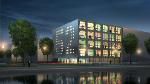
The new building increases existing qualities of the natural and architectural environment. Aside from the geometry, colour also enhances the duality between old and new. While the white surface of the Passionsspielhaus stands out optically during the time of the summer festival, the changing of seasons brings upon a cromatic reversal of the ensemble. The configuration of the Festival Hall resembles a tectonic stratification. Its crevices and faults lying in between indicate the way into the building’s interior. At nighttime the incisions and folds in the distinctive façade allow insight into the radiant foyer.

courtesy DMAA
Access
The topographic imprint on the new building is consequently continued within its interior. The design idea is guided by two defining parameters: the interrelation between the interior and the surrounding natural space as well as the spatial configuration of a functional, internationally acclaimed concert hall. Flowing visual and functional spatial references define the architecture. Areas with diverse usage and geometry show the creative engagement with communication and calm, dynamism and concentration. The sequences of movement are subtly guided by the sensory experience of the rooms. The access staircase is integrated into the landscape thus guiding visitors into the building.

courtesy DMAA
Functions
Cloakroom and reception desk are situated near the entrance. The foyer – an asymmetric construction volume – allows manifold views onto the surrounding nature as well as onto the neighboring Passionsspielhaus.
A staircase running in the opposite direction leads onto the upper gallery where the impressive relationship between interior and exterior space can be experienced again through the ample west façade made of glass. This level also hosts the building’s secondary functions.

courtesy DMAA
Orientation, room sequence and functional relations are integral parts of the architectural dramaturgy: ample communication areas, retracting and expanding circulation areas and varying room hights translate the building’s tectonic geometry in a sensory manner. In a consequent and effective way, the approach to the concert hall is staged through a gentle surge of the entrance level.
The respective levels of the foyer are connected with the concert hall through two entrances. The latter is situated in the centre of the building like a shell, its rear part being anchored in the rock. The transition from the foyer into the concert hall is accompanied by spatial and atmospheric change: dynamism, variability and asymmetry give way to maximum concentration, static calm and orthogonality.

courtesy DMAA
Materials
Like the succession of rooms, the mterials concept is equally defined by a sensorial perception of the respective usage areas. Differentiations in geometry, haptics and surfaces of room elements increase the senorial experience of single function areas and facilitate orientation.
The shine in the foyer during the winter’s sunset increases the communicative character of this area of encounter. Following the metaphor of an exposed jewel, the concert hall is defi ed by a distinct change of materials: wood surfaces and subdued colours create a warm room composition of tense quiet thus directing the visitors’ attention onto the performance to follow.
Multiple technical equipment and the possibility to transform the hall allows a varied use which reaches far beyond the function of a classical concert and festival venue.
+ Project facts
Competition: 1st prize
Start of planning: 09/2007
Start of construction: 11/2010
Completion: 08/2012
Address: Mühlgraben 56, A 6343 Erl, Tyrol
Category: Cultural
Net floor area [total]: 8.800 m²
Foyer: 1.250 m²
Auditorium: approx. 580 m² [732 permanent + 130 temporary seats]
Stage: approx. 450 m²
Orchestra pit: approx.160 m²
Gross floor area: 10.000 m²
Site area: 9.700 m²
Built-up area: 4.500 m²
Volume: 60.000 m³
Client:
Festspielhaus Erl
Errichtungs- und
Betriebsges.m.b.H.
Project manager: Sebastian Brunke
Project team:
Jörg Rasmussen
Torsten Sauer
Eva Schrade
Simon Takasaki
Anja Vogl
CONSULTANTS
Execution planning/ Representative of the client: MHM architects, Vienna
Structural engineering: FCP Fritsch, Chiari & Partner ZT GmbH, Vienna
Domestic engineering: Zentralplan GmbH, Wiener Neustadt
Building physics: Dr.Pfeiler GmbH, Graz
Acoustics: Quiring Consultants, Aldrans
Light planning: Haighlight, Innsbruck
Stage planning: e.f.f.e.c.t.s technisches
Büro GmbH, Klosterneuburg
Geologist: PGI GmbH, Kufstein
Fire prevention: Norbert Rabl ZT GmbH and BSB Ing. Christoph Wegscheider, Mils
General contractor: STRABAG AG /Dir AX, Walchsee
Project Leader: Ing. Georg Höger
Site management: DI Dietmar Kaltenhauser
 با اهداء سلام